The short answer: for most businesses the right cable is Cat6a. It carries 10 gigabit speeds across the full 100 metre run, handles power-hungry devices like cameras and Wi-Fi access points without overheating, and costs only a little more than Cat6 once you count labour. Cat6 is the budget option for basic networks, and Cat8 is a data centre cable that is overkill for a normal office. Here is the detail.
The comparison at a glance
| Cat6 | Cat6a | Cat8 | |
|---|---|---|---|
| Top speed | 10 Gbps, short runs only | 10 Gbps to 100 m | 25 to 40 Gbps |
| Distance for top speed | about 37 to 55 m | 100 m | about 30 m |
| Bandwidth | 250 MHz | 500 MHz | 2000 MHz |
| Shielding | usually unshielded | shielded or improved | always fully shielded |
| Best for | budget 1 Gbps desks | offices, access points, cameras | data centre, switch to switch |
Speed and distance, the part that trips people up
Cat6 can carry 10 gigabit, but only on a short run of roughly 37 to 55 metres. Across the full 100 metre cabling distance, Cat6 only guarantees 1 gigabit. That gap is why an office cabled in Cat6 today can hit a wall when it moves to faster equipment.
Cat6a was built to fix exactly that. It delivers 10 gigabit across the full 100 metres thanks to tighter construction and shielding that controls interference between cables. For a business that wants its cabling to last, this is the difference that matters.
Cat8 goes much faster, 25 to 40 gigabit, but only over about 30 metres. Beyond that short distance it offers nothing over Cat6a. That short reach is why Cat8 lives in server rooms and data centres, connecting nearby switches, not running out to desks.
Power over Ethernet and heat
Modern offices run cameras, door access and Wi-Fi access points off the network cable itself using Power over Ethernet. Higher-power PoE pushes more current, which creates heat in the cable. Cat6a uses a thicker conductor than Cat6, so it runs cooler and loses less power over the run. If you are powering cameras or Wi-Fi 6 and 7 access points, Cat6a is the safer choice.
When each one makes sense
- Cat6: a fair budget choice for standard desktops on a 1 gigabit network with short runs. It saves a little upfront.
- Cat6a: the right default for new business cabling. It covers 10 gigabit to the full distance, handles PoE cameras and access points, and future-proofs the building for the next decade or more.
- Cat8: a specialist data centre cable for short, very high speed links between switches. For a normal office it is thicker, stiffer, pricier and pointless.
A quick note on Cat7. You will see it advertised, but it was never recognised as a standard by the TIA, and it needs non-standard connectors to hit its rating. The industry effectively skipped it. Cat6a covers the same job on standard connectors, and Cat8 is the recognised next step up.
Why install once beats install cheap
The cable itself is a small part of a cabling job. Most of the cost is labour, conduit, terminations and testing, and that labour is the same whether you pull Cat6 or Cat6a. Once everything is counted, Cat6a usually costs only 10 to 30 percent more per point than Cat6.
Cabling lives in the walls for 15 to 20 years. Re-pulling cable through an occupied building later is expensive and disruptive. Spending a little more now to put in Cat6a buys you a decade or more of headroom for faster equipment, which is almost always the better business decision.
Frequently asked questions
Is Cat6 or Cat6a better for an office?
Cat6a, for most new installs. It carries 10 gigabit across the full 100 metres and handles PoE devices better, while Cat6 only does 10 gigabit on short runs. The extra cost is small once labour is counted.
Do I need Cat8 for my business?
Almost certainly not. Cat8 only delivers its 25 to 40 gigabit speed over about 30 metres and is designed for data centre links between switches. For office desks, cameras and access points, Cat6a is the right cable.
What is the maximum distance for these cables?
All run to 100 metres for a standard link, but Cat6 only does 10 gigabit on the first 37 to 55 metres, Cat6a does 10 gigabit to the full 100 metres, and Cat8 only reaches its top speed within about 30 metres.
Is Cat7 a good option?
No. Cat7 was never an official TIA standard and needs non-standard connectors. Use Cat6a for normal runs and Cat8 for short data centre links.
Sources
- Cable categories and standards, Cables and Kits
- Cat8 speed and distance, Eaton
- PoE, cable gauge and heat, Versatek
What to do next
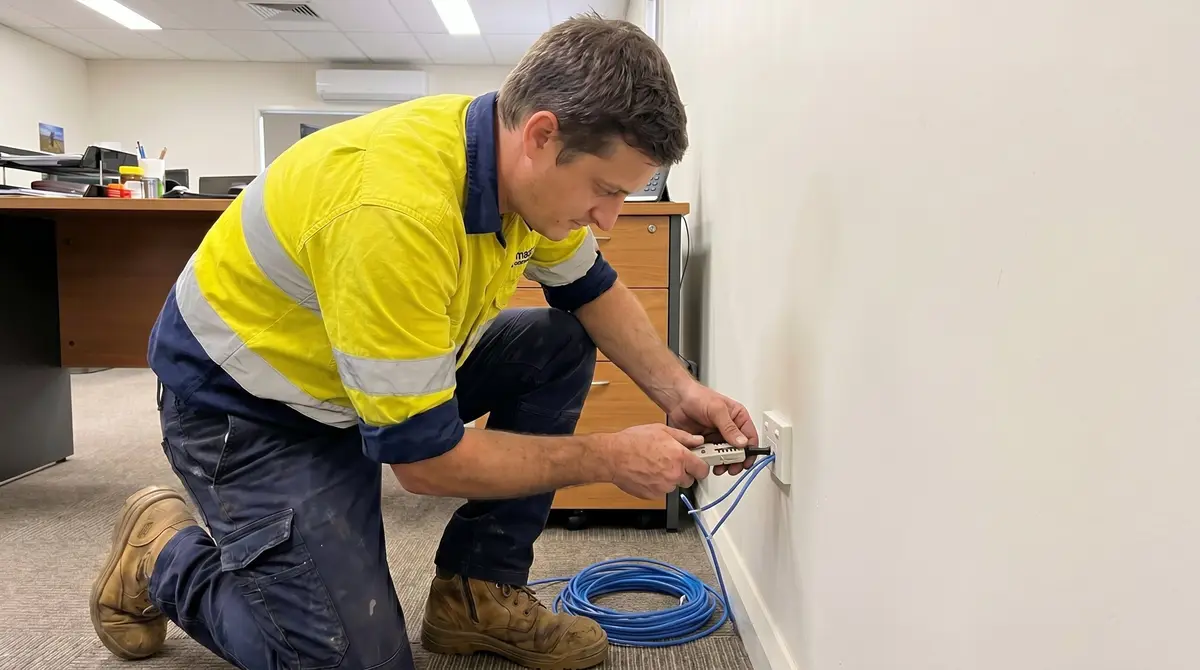
If you are fitting out an office, adding cameras, or upgrading a tired network, the cable you choose now decides what your building can do for the next decade. We design and install structured cabling across Mackay and the region, built to standard and tested on handover.
Get a cabling quote at /quote
Last reviewed June 2026.